
Why I Created Cadent
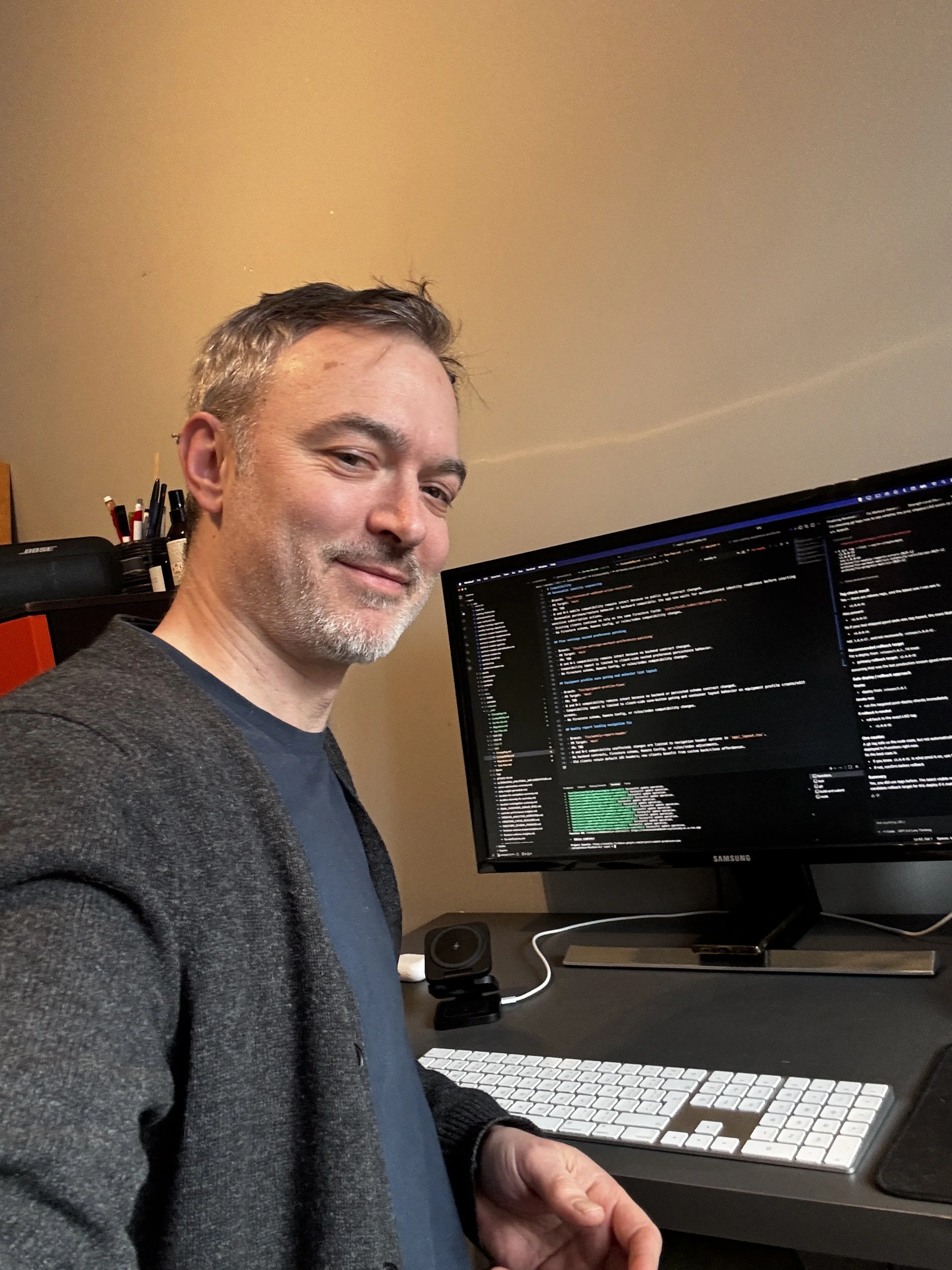
Me and the team (Claude)
My background
I’ve over 30 years experience in tech, and 13 in the health and fitness sector. Beginning in around 1998 I worked on what was one of the first user generated content platforms. It was earlier than Facebook, even before Friends Reunited. I also worked for creative agencies for many years, and then in 2013 began a project for Fitness First, a gym chain in the UK, but with a global footprint. It was a big, bold vision to embed technology in the member journey. I’ve been working on that same mission since then, one way or another. It’s been exclusively B2B in that time, and whilst I learned an enormous amount, it’s also been hard to achieve the success I wanted to see from a product perspective.
What’s next
I’d not written code in many many years when I decided to build something. I got started on Code Academy, powering through a TypeScript course. Whilst getting my head around Typescript syntax I was also thinking what I wanted to do. I felt a bit burnt out after managing teams in multiple locations for years. In my last role as a CTO we had teams in Denmark, London, Amsterdam and NZ, and an offshore team in India. I really liked the idea of working with a small, local team. I also liked the idea of making something myself, and I knew what I wanted to build — using all my knowledge and experience from the past 30 years and channeling it into something I couldn’t find in the market, despite the fact that it’s a crowded space.
The mission
The science is clear: after age 30, we begin to lose 3% to 8% of our muscle mass per decade (it’s called sarcopenia) [1]. Maintaining muscle isn’t just about looking good; it’s a key predictor of how well we function in our 70s and 80s. Research has shown that even a small amount of resistance training is associated with a 10–17% lower risk of cardiovascular disease, cancer, and diabetes [2]. And just as importantly, maintaining your physical strength and flexibility also makes you feel good. You have more energy. You can lift things, your back hurts less, your posture is better, and you’re able to do more as you get older. I decided what I wanted to do: – democratise strength training, to make as many people as possible understand the benefits, to learn how to train properly – resulting in longer and more healthy lives.
The concept
Since I’ve been in the fitness sector, I must have tried dozens of different fitness apps. The weird thing was that I never found one that I really liked, or actually wanted to use. They always seem to have something that wasn’t right: hard to use, bad design, no data/insights, huge onboarding, aggressive paywalls, too specific workouts (eg callisthenics or only home workouts). It seemed wrong that having worked in the industry for 15 years, and going to the gym for 25 years I had not found an app that was my go-to product. I’ve also been a runner for 15+ years, and Strava has tracked virtually every single run in that time. Nothing for gym training felt comparable to that experience. I knew how hard it is to make a really great gym training app. I’d been working for several years on them, with the added complexity of it being a white-label B2B (business to business) product. We had to architect it to be deployable with a different look and feel, backend membership integrations, payment models, content, feature configurations. It was a massive headache, and extremely difficult to deliver a premium user experience.
I now had to figure out who I was making this for. If you look at the App Store today, strength training apps generally fall into three main types.
First, you have the trackers. These are built for people who know strength training. They tend to be quite manual to use, if you even know what you need to do. Lots of tapping to enter sets, reps, exercises.
Then you have the "content libraries." These apps often provide hundreds of workouts and enormous exercise libraries. It can be a paradox of choice, and most people don’t know what to choose.
Finally, there are an increasing number of “AI powered” training apps. I’ve used quite a few of these as well. I could go too deep here, but I’ll save it for a later post. I don’t find any of them to be very good. The “AI coach” generally feels superficial, and the progression of a training plan lacks coherence and transparency. How can you tell the difference between a workout that is arbitrarily different to the previous one, versus one that is part of a personalised progression that has a clear path forwards? I didn’t find an app that did this well.
So the concept for Cadent became clear – a product that aimed to provide truly personalised, intelligent strength coaching for what I started to refer to as “everyday athletes”. People who value their health, they want to train effectively and see results without needing to wade through endless onboarding flows and choose from hundreds of workouts. They want to feel like an everyday athlete. Too many people say the gym is boring. I believe this is because most people are fundamentally aimless in the gym. Going to the gym should feel purposeful and rewarding, motivation should be intrinsic – “I want to go to the gym because…” rather than the more standard “I should go to the gym because I am paying for it and haven’t been for two weeks…”. Intrinsic motivation is built from three pillars, Self Determination Theory [3] :
Autonomy: This is the need to feel a sense of ownership, volition, and choice in one's behavior, rather than feeling compelled or controlled by external factors.
Competence: This involves the feeling of mastery, effectiveness, and the ability to produce desired outcomes in an activity.
Relatedness: This refers to the need to feel connected, cared for, and to have a sense of belonging with others (e.g., peers, team members, family).
These principles have guided how design fitness products for many years. It helps me from structuring my product roadmap, right down to how I design specific features.
My goal is to make Cadent the best strength training platform app available, for every day athletes to be able to train with intelligence, flexibility and purpose.
References:
[1] Volpi, E., et al. (2004). Muscle tissue changes with aging. Current Opinion in Clinical Nutrition and Metabolic Care.
[2] Momma, H., et al. (2022). Muscle-strengthening activities are associated with lower risk and mortality in major non-communicable diseases. British Journal of Sports Medicine.
